The Minimalist Hen Do Protocol: Essentialism Over Excess

Know Your Activities Before You Pack
You want to feel prepared without looking paranoid. Here’s what actually matters: the mechanism is constraint. Military strategists call this “task saturation”—when you overload a system, decision-making collapses. Your brain does the same thing in a hotel room. Start by naming the three to five actual activities happening this weekend. Dinner out. Day drinking. Maybe a spa visit. One night club. That’s it. Everything else you pack is waste.
Once you have your activities locked, eliminate redundancy ruthlessly. Most packing lists tell you to bring seven tops for a two-night trip. That’s bloat. You wear each item once or twice. You don’t need backup outfits for backup outfits. Ask one question per item: does this serve more than one activity or one outfit? If it doesn’t, it stays home. This filter removes roughly forty percent of what most people pack.
One Piece, Multiple Contexts
Borrowing from fashion design’s principle of “modular dressing,” treat each item as a building block that works across different outfit combinations. A black blazer isn’t a nightlife-only piece. It layers over casual wear, dresses up loungewear, and functions as a light jacket when air conditioning hits. The textile doesn’t change. The context does. That’s the entire lever.
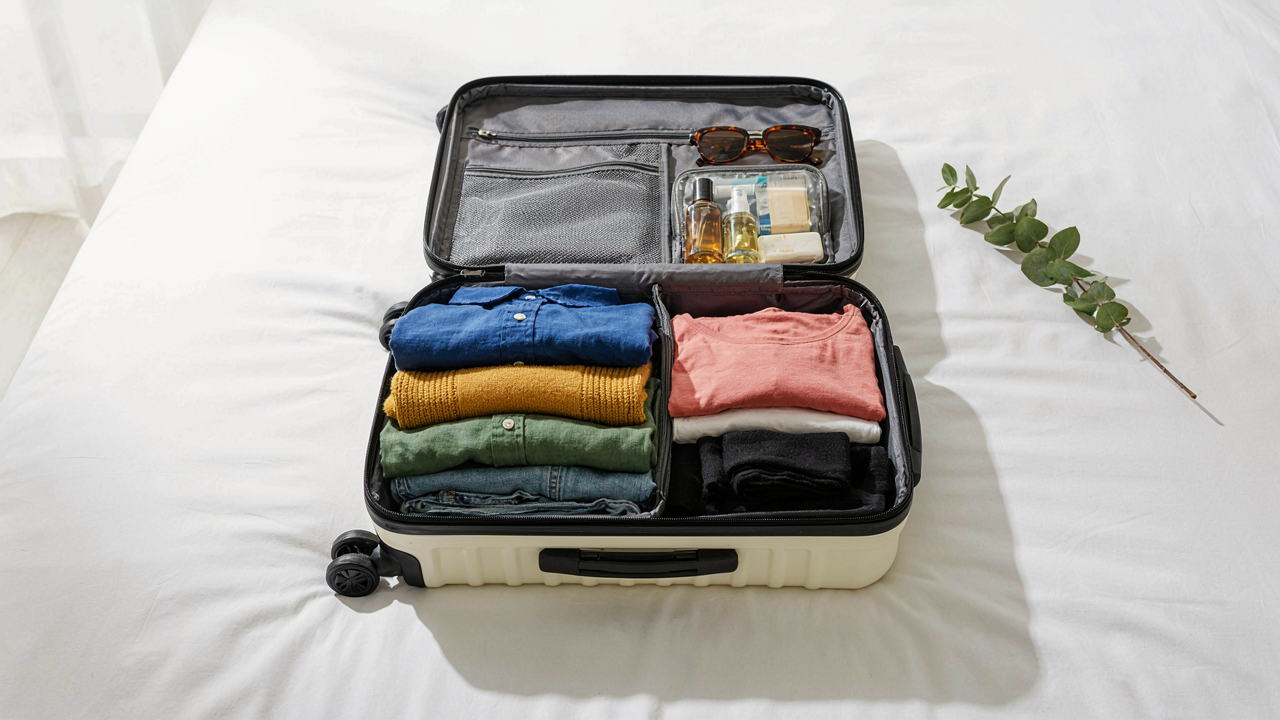
The goal is to hit three outfit categories—casual daytime, dressed up evening, and sleep wear—using the fewest total pieces. A white button-up works over a tank top, under a sweater, or alone. Black jeans pair with sneakers and a tee at brunch, then a blouse and heels at dinner. One pair of shoes that work with both casual and dressed-up clothing eliminates the need for separate day and night footwear. Stack your items for compatibility before you fold anything.
Budget Bachelorette Trip Checklist: The Scarcity Mindset Advantage

Experiences Over Stuff
You want permission to pack light so you don’t look cheap. Here’s the real mechanism: every item you bring is attention you’re not paying to what’s actually happening around you. Economics calls this the opportunity cost of carrying capacity. Your luggage weight is directly proportional to your ability to stay present.

The common advice is to “pack versatile pieces.” Wrong framing. You don’t need versatility—you need ruthlessness. A bachelorette weekend doesn’t demand a rotating wardrobe. It demands your brain capacity free to engage with people, places, and moments. Strip your bag to the absolute minimum that covers basic functions: sleep, shower, go out. Everything else is friction between you and the actual trip.
Inconvenience Builds Resourcefulness
People avoid friction because friction feels bad in the moment. That discomfort is where adaptation happens. You’ll solve problems you never anticipated because you packed strategically light, and that problem-solving is the real memory of the trip, not the outfit you wore on Friday.
Bring one versatile cover-up instead of five tops. Wear the same shoes twice. Shower cap instead of a hair dryer. Consolidate toiletries into sample sizes or travel containers. These aren’t sacrifices—they’re constraints that force you to be creative with what you have. The resourcefulness you build in a single weekend transfers directly to how you handle bigger problems. Pack the minimum, and you’ll remember the people, not the logistics.
The Anti FOMO Bachelorette Party Packing List

Shut Down Your Phone Before You Pack
You’re scared you’ll miss something worth posting about. Here’s what actually happens: the moment you stop documenting the weekend for an audience, you experience it instead of performing it. This isn’t spirituality. It’s signal theory. In communications, noise dilutes the message. Your phone is noise. Every notification fractures your attention into smaller pieces, and you pack based on what photographs well, not what you actually need.

A pre-trip social media blackout forces you to pack for reality instead of content. You choose clothes that feel good for three days straight, not outfits that hit different angles under bar lighting. You pack toiletries you’ll use, not products you’ll arrange on a bathroom counter for a photo. The gap between what looks good and what works is where budget travelers hemorrhage money. Stop that now.
Clothes That Work, Not Clothes That Perform
Forget the advice about packing statement pieces or “elevated basics” dressed up with accessories. That’s consumption dressed as strategy. You need clothes you’ve worn before, not experimental pieces you’re testing. Pack one pair of shoes you’ve broken in for eight hours minimum. One outfit you’ve already worn to social situations where you felt fine. One backup top you actually like wearing, not one you bought because it photographs well under specific lighting.
The rule is simple: presence kills the urge to perform. When you’re actually engaged with people instead of thinking about how you look to people, your outfit choices become invisible. That’s the state you want. You move through the weekend without the mental tax of wondering if your clothes are reading correctly. That freed-up bandwidth goes toward actual connection, conversation, and memory formation instead of the constant low-level anxiety of being perceived.
Packing List For Bachelorette Weekend: The Antifragile Approach

Plan For Disruption, Not Perfection
You want a packing list that makes you feel prepared so you stop thinking about logistics and start thinking about looking good. Here’s the real mechanism: most people pack to prevent specific problems they imagine, then ignore the problems that actually happen because they weren’t on the list. Nassim Taleb’s antifragility framework applies directly here. In finance, antifragility means building portfolios that gain from volatility rather than just surviving it. Your packing strategy should do the same with a bachelorette weekend: choose items that perform better under unexpected conditions, not items that protect against predicted ones.

The difference between fragile packing and antifragile packing is this: fragile means you pack the exact outfit for the exact plan, then the plan changes and you’re stuck. Antifragile means you pack pieces that work in multiple combinations across multiple scenarios. A black wrap works as a shawl, a beach cover-up, a dress layer, and emergency jacket. That single item gains optionality from chaos instead of breaking under it. Stop building contingency plans for every possible weather pattern. Instead, pack items that improve your position whether the weekend goes as planned or completely sideways.
Minimal Kit, Maximum Adaptation
Common advice tells you to “bring versatile pieces” then lists ten items that only work in specific combinations. That’s incomplete thinking. The real constraint isn’t your luggage space. It’s decision fatigue and the hidden cost of managing too many options. A genuine minimal kit forces you to choose pieces that function across contexts without mental negotiation. Every item should earn its spot by working in at least three distinct scenarios: day activity, night activity, and emergency backup. If something only works one way, it’s not versatile. It’s just taking up room.
Build your kit around neutral base layers and statement pieces you can repeat without anyone noticing. Two good pairs of shoes beat six mediocre ones. One quality cardigan beats three flimsy ones. Three bottoms that coordinate with everything beat eight that don’t. This isn’t minimalism for aesthetic reasons. It’s math. Fewer items with higher utility density mean you pack less, move faster, make better decisions, and stay within budget by not replacing forgotten items mid-weekend. Pack once, wear everything multiple times, spend less, and own the weekend.
Deconstructing The Bachelorette Trip Packing List Myth

What You Actually Don’t Need
You’re afraid of looking unprepared, so you pack insurance items that never leave your bag. The real mechanism at work here is hedging against social judgment, not against actual need. Most bachelorette packing lists include items designed to handle scenarios that rarely happen, and when they do, you can buy them on location for less mental load than carrying dead weight.
- Hair styling tools (full kit): One flat iron or curling iron handles most needs. Hotels provide blow dryers. Backup tools stay home and free up luggage space and weight capacity for things you’ll actually rotate through.
- Multiple swimsuit cover-ups: One lightweight sarong or oversized shirt works for pool, beach, and casual dinner. Layering happens with items already in rotation. Dedicated cover-ups sit unused while taking up fold space.
- Full makeup backup collection: Bring duplicates of your five daily products, not your entire collection. The bride’s friend who uses different brands can borrow from the group or buy a single item locally if needed.
- Extra shoes beyond three pairs: Comfortable walking shoes, one dressier option, and one casual pair handles every scenario. Extra shoes exceed weight limits and compress other items. One pair per distinct activity level is the rule.
- Bulky hair products and tools: Dry shampoo, texturizing spray, and heat protectant concentrate the weight into smaller containers. Hotels sell these items. Traveling with full-size bottles wastes packing efficiency and duplicates what’s already available.

The pattern is simple: items that solve hypothetical problems don’t earn their luggage real estate. Before packing anything, ask if you’d buy it on location if you forgot it. If yes, leave it home.
The Control Illusion Running Your Suitcase
Psychology and probability intersect here: overpacking feels like controlling chaos, but it actually creates it. When you pack for every possible temperature, mood, and social situation, you’re not preparing for the trip—you’re trying to eliminate the unpredictability of a trip. That’s the mechanism nobody names. More options don’t increase flexibility; they increase decision fatigue and physical constraint.
The budget traveler compounds this by assuming more items lower risk. It doesn’t. A smaller, committed wardrobe forces you to work with what you have, which builds adaptability—the actual skill that saves you in unpredictable situations. You arrive with a clear mental model of what you own and how pieces combine. You don’t stand in front of an overstuffed suitcase paralyzing yourself with false choices. Constraint is the tool. Use it deliberately when you pack.
Bachelorette Weekend Checklist: Prioritizing Experience Over Stuff

Memories Cost Less Than Things
You want to feel like you got your money’s worth, which is why you’re thinking about packing the perfect outfit or bringing backup options for every scenario. But here’s the mechanism: experiences anchor memory better than objects because they involve novelty, social interaction, and time. A shared dinner where everyone laughs costs fifty dollars and gets recalled for years. A backup dress you never wear costs the same and disappears into your closet. Budget travelers win by inverting the packing priority. Allocate money toward the activities first, then pack the minimum that serves them.

The real constraint isn’t what fits in your luggage. It’s what fits in your trip’s budget and your group’s attention span. Most bachelorette weekends fail because people overpacked their schedule with things to do, not because they underpacked their suitcase. Spend thirty percent more on one excellent dinner or activity than you planned. Spend thirty percent less on outfits. The group will remember the experience, not the number of outfit changes you brought.
The Strategic Power Of Empty Luggage Space
Economics teaches scarcity and surplus, but packing teaches the inverse: empty space is the most valuable real estate in your bag because it absorbs the unplanned. You cannot predict what you’ll need until you arrive. A friend’s shoe breaks. Someone spills something. You find a vintage store and want to buy one item. Empty luggage space solves all three problems without forcing you to check a second bag or compress everything into wrinkles.
Pack sixty percent of your estimated capacity. This protects you against poor forecasting and creates room for shared items like group snacks, hangover remedies, or decorations for the hotel room. The mechanism is simple: you pay the same luggage fee whether your bag is full or half-full, so the cost of empty space is zero. Use it. Fill the remaining capacity only on the return trip when you know what you actually needed.
The Zen Of The Hen Do Packing List: Inner Calm, Lighter Load

Decide Before You Pack
You’re afraid of looking unprepared. That’s the real reason you’re reading this. The mechanism at work here is decision fatigue, borrowed from cognitive psychology. Every item you pack is a decision you make twice: once when you throw it in the bag, again when you stand in front of your suitcase at 11pm second-guessing yourself. Fewer items means fewer decisions. The math is simple.

Pre-trip planning eliminates the panic spiral. Decide your outfit combinations now, not in the hotel room. Write down the three to four activities happening. Match clothing to those activities, not to hypothetical scenarios your brain invented. This takes thirty minutes and saves you from packing half your closet.
Possession Anxiety Is Expensive
The luxury industry sells you the opposite story. They want you to believe more stuff equals more freedom. It doesn’t. Traveling light means you control your weekend instead of your weekend controlling you. One carry-on forces real choices. Real choices mean you actually wear what you pack.
Budget travelers who overpack waste money on checked bags, baggage fees, and laundry services they wouldn’t need otherwise. They spend the weekend managing belongings instead of being present. The mechanism is simple: less ownership equals less friction equals more actual leisure. Do one final bag purge before you leave. If you haven’t touched it in the planning phase, it doesn’t leave your house.
Bachelorette List To Bring: The ‘Regret Minimization’ Framework

What Actually Creates The Memory
You’re worried about looking unprepared or missing the moment everyone else captures. Here’s the mechanism: memories form around novelty and group participation, not item possession. The gap between what you pack and what generates stories isn’t about quantity—it’s about removing friction from participation. Most packing advice treats this backward, listing items as if ownership equals experience. What matters is packing only what lets you move, interact, and stay present without logistical drag pulling your attention elsewhere.

The regret framework comes from decision theory: you minimize regret by optimizing for the variables you control, not the outcomes you can’t. You control whether your shoes let you dance for six hours. You control whether you have your phone charged for photos. You cannot control whether the group decides to hit a rooftop bar at 2 AM. Pack for the first set of variables. Leave the rest alone.
What You’ll Actually Miss Versus Fear Missing
Most travelers pack against imaginary scenarios, not real ones. You don’t need that backup dress because outfit failure isn’t a bachelorette weekend risk—overcommitment is. The actual regret comes from arriving tired because your luggage was too heavy, or sitting out an activity because you didn’t pack the right shoes. Fear missing creates bloat. Actual miss means you couldn’t participate when the moment happened.
Test each item with a single question: will the absence of this prevent me from doing something the group is doing? If yes, pack it. If it’s “just in case” or “what if the weather,” cut it. One pair of shoes that works for drinking, dancing, and walking beats three pairs covering imaginary scenarios. The discipline here saves physical space and mental bandwidth. Both matter equally on a trip where energy and movement are the actual product you’re buying.
The Real Cost Isn’t In Your Bag; It’s In Chasing An Ideal That Never Existed

Stop packing for the bachelorette weekend you think you should have. Pack for the one you’ll actually live. Your friends don’t care if your outfit costs fifty dollars or five hundred. They care if you show up present. That bachelorette weekend packing list gathering dust on your notes app? Delete it today and write one sentence instead: what do I need to feel like myself? Then buy nothing else. The trip you regret won’t be the one where you packed light—it’ll be the one where you forgot to actually arrive.