The “Free Venue” Fallacy: Unmasking Hidden Costs

What The Municipality Actually Requires
You picked your backyard because it costs nothing. That’s the fear talking: you’re terrified of getting priced out of your own wedding. But zero venue cost doesn’t mean zero cost. Most jurisdictions require permits for gatherings over a certain headcount, and they enforce this. A wedding is classified as a public assembly event in most counties once you cross 25-50 people, depending on locale.
The permit itself runs 50 to 500 dollars. Insurance requirements vary wildly by jurisdiction, but many municipalities now demand liability coverage of 1 to 2 million dollars for any gathering on residential property that serves alcohol. You’ll pay 300 to 800 dollars for a one-day event policy. Some counties add inspection fees, parking permits for guests, or noise variance costs. Call your local code enforcement office. Don’t guess.
When Your Infrastructure Becomes The Venue Cost
Borrowed from civil engineering: load capacity is the constraint that determines what’s actually feasible. Your backyard’s electrical system was designed for a house, not a catered event with a DJ, heated tent, and string lighting. Most residential panels run 100 to 200 amps; a wedding setup burns through power fast.
You’ll rent a generator for 300 to 800 dollars, or upgrade temporary power service through an electrician for 500 to 2000 dollars. Water comes next. Catering demands 300 to 600 gallons for 75 guests. Your garden hose won’t cut it. Restroom capacity exposes the real problem: most houses have one or two bathrooms. Renting portable restrooms costs 300 to 1000 dollars depending on quantity and duration. These aren’t additions to the venue cost. They are the venue cost.
The Logistics Lattice: Lessons From Military Supply Chains

Mapping Guest Flow Like Territory Control
You want to believe a backyard wedding just happens. It doesn’t. You’re afraid of bottlenecks, congestion, and chaos that exposes you as disorganized. Military logistics borrowed a term called “throughput capacity”—the maximum volume moving through a fixed point per unit time. Your backyard has a throughput capacity. Exceed it, and you get lines, frustrated guests, and a failed event. Calculate this before you book your caterer or send invitations.

Throughput starts with entry and exit. One gate creates a pinch point. Guests arrive in clusters, not evenly spaced. Plan a fifteen-minute arrival window where sixty percent of your guests show up. If you have one hundred guests and a single driveway entrance, you need parking solutions that don’t require them to walk past your neighbor’s fence. The path from parking to ceremony area to cocktail zone to dining space to restroom—each transition point has capacity limits. A single bathroom for one hundred guests costs money to rent or upgrade. Sequence matters more than aesthetics here.
Vendor Timing And Physical Space Constraints
The common advice: “Hire professionals and they’ll figure it out.” This fails because professionals optimize for their own efficiency, not your day. Caterers want four hours of kitchen access before service. Photographers need clear sightlines and light. Rentals require delivery and setup windows. Your backyard is fixed real estate. If your caterer and rental company both need access at 2 PM on the same Saturday, one of them waits, and someone pays for that wait time.
Create a load-in timeline that staggers vendor arrival by thirty-minute intervals, starting with structural elements first: tent, tables, chairs. Then electrical and water requirements. Catering equipment last. Build in a thirty-minute buffer between each vendor departure and the next guest arrival. Communicate this timeline in writing—email, not text—so there’s no dispute about who arrives when. Vague scheduling creates chaos and overtime charges that inflate your actual at home backyard wedding cost beyond estimates.
The Outdoor Home Wedding Equipment Escalation

When Basic Becomes Insufficient
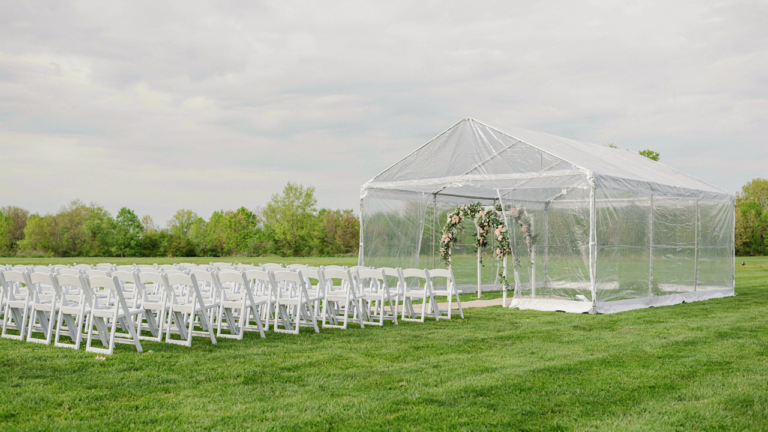
You want to believe you can pull off a wedding in your backyard with minimal gear. What you’re actually afraid of is looking cheap in front of people who matter to you. Here’s the mechanism: every guest sees your setup against their internal reference point of weddings they’ve attended. One tent feels sparse. Two tents feel intentional. The rental industry knows this and prices accordingly.

Your backyard lacks the infrastructure of a venue. A venue hides its bones. Your property exposes them. Guests sit on grass without definition, eat at tables that float in open space, and experience weather as a constant backdrop instead of an atmospheric detail. The rentals don’t add luxury. They add the basic structure that makes a backyard feel like a deliberate event instead of a yard where something happened to occur.
Lighting That Solves The Real Problem
When the sun sets, your backyard becomes a black void. Standard advice says “add string lights for ambiance.” That’s incomplete. String lights solve visibility first, aesthetics second. The real cost driver is the transition hours between dusk and full dark when you need layers of light at different intensities. Overhead lighting from bistro strings runs fifteen to fifty cents per bulb per hour in rental costs. Ground-level uplighting adds another layer. And you need redundancy because a single lighting system failing leaves you in actual darkness at 8 PM.
Sound systems escalate the same way. A Bluetooth speaker costs nothing to own but broadcasts to a radius of maybe thirty feet indoors. Outdoors, with no walls to bounce sound, that radius shrinks to twenty. Add a second speaker and you’re suddenly coordinating synchronized audio across your property. Rental sound systems ($200-600) handle this automatically. Weather contingency eats another percentage of budget. A tent protects from rain but not from wind loads on electrical equipment or water damage to rented sound gear left exposed to condensation overnight.
Catering For Backyard Reception: Beyond The Potluck

Professional Service, Staffing, And Food Safety
You want to believe you’ll save money by having your cousin handle the food, but what you’re actually protecting is your ego from admitting this event requires labor. The real cost mechanism is regulatory liability: in most jurisdictions, a caterer’s license and insurance transfer legal responsibility from your home to their business. Without it, you own every foodborne illness claim.

Hiring a licensed caterer runs 15 to 25 dollars per person for basic service in most markets, but this covers liability protection, food handling compliance, and staffing continuity if something breaks mid-event. Self-catering with untrained helpers creates hidden costs: rented chafing dishes, ice purchases, serving utensils, and the time tax of coordinating people who have no system. A professional brings their own equipment and execution protocol, which eliminates improvisation failure.
Kitchen Access, Refrigeration, And Waste Management
Your backyard kitchen capacity determines whether catering logistics collapse or operate cleanly. Most homes have one refrigerator and limited counter space, so a caterer needs to know this constraint upfront to stage food properly and avoid temperature danger zones. This isn’t about cleanliness preference, it’s about thermodynamic reality: food held between 40 and 140 degrees Fahrenheit deteriorates fast.
Plan for 1.5 to 2 linear feet of refrigeration per 50 guests if using a caterer. Renting an additional cooler or walk-in runs 150 to 400 dollars for an event, depending on duration. Waste management matters too: thirty guests generate roughly 40 pounds of compost and trash. Establish a collection system with bins before service starts, not after guests leave plates everywhere. The caterer should specify their waste removal expectations in the contract, or you’ll pay disposal fees on top of their fee.
The DIY Debt: Your Time Is Not Free

What Self Management Actually Costs
You want to believe you’re saving money by handling everything yourself, but what you’re really doing is swapping currency. Economics calls this opportunity cost, and your backyard wedding is no exception. Every hour you spend coordinating vendors, managing timelines, or solving problems on wedding day is an hour you’re not working, not building, not resting. Most people never calculate this side of the equation because admitting it means admitting the savings weren’t real.

Here’s the mechanism: you have a fixed number of productive hours per week. A backyard wedding demands roughly 40 to 60 hours of active management across four to eight weeks before the event. If your time generates income at any meaningful rate, those hours cost money. A wedding planner absorbs this burden for a flat fee, usually 10 to 15 percent of total budget. The self-managed route doesn’t eliminate the cost, it just hides it in your calendar and makes you feel like you won.
The Hidden Friction Between People Who Matter
Emotional labor in wedding planning isn’t sentiment, it’s operational load. The common advice says “delegate tasks to family and friends,” but this creates a different problem entirely: you’ve now introduced unpredictable performance variables into your event. Family members have competing priorities, varying competence levels, and no legal obligation to execute. Miscommunication happens. Resentment builds. Relationships strain under the weight of unmet expectations you never should have placed on them in the first place.
The real cost emerges on wedding day when decisions cascade, problems surface, and nobody has clear authority or accountability. A professional vendor owns the outcome. Your cousin who volunteered to coordinate catering owns nothing except frustration. Track which decisions you make solo versus which ones involve partner input or family negotiation. Document the disagreements and rework cycles. This friction is the actual budget item you never itemized, and it’s why some backyard weddings feel tense while others feel seamless, regardless of budget size.
The Budget Backyard Wedding Security Protocol

Controlling Access And Neighborhood Friction
You want people to feel welcome while keeping chaos out. That’s a contradiction most planners ignore. The real mechanism is perimeter control: you’re running a closed system on open land, which means your neighbors become stakeholders whether you invite them or not. Parking spillover, noise after dark, and foot traffic on adjacent properties generate complaints that cost money to fix later.

Set a hard parking boundary before guests arrive. Rent a small lot nearby or designate specific on-street spots if your street allows it. Brief neighbors 48 hours before the event, not as courtesy but as strategy. Cheap wedding planners skip this step. They lose deposits to noise violations or forced early shutdowns. A two-minute conversation with the house next door eliminates most friction points and gives you legal cover if complaints surface.
Emergency Readiness And Liability Layers
Borrowing from risk management in logistics, you need redundancy: if one system fails, the next one catches the failure. Your vendors are your first point of leverage, not your safety net. Most backyard weddings lack clear vendor liability chains, which means you absorb the cost when something breaks or someone gets hurt. A caterer’s food handling accident becomes your liability. A rented tent collapse becomes your problem.
Require written proof of liability insurance from every vendor before they arrive, even small ones. Have a basic first aid kit on site and know where the nearest hospital is. If weather threatens, finalize your backup plan 72 hours out, not the morning of the event. Communicate the plan to your vendors in writing so nobody improvises. The cost of a vendor’s insurance rider is nothing compared to a lawsuit or a guest injury claim that lands on you.
Simple Home Wedding Decor: Less Is Still A Cost

Design With Purpose, Not Clutter
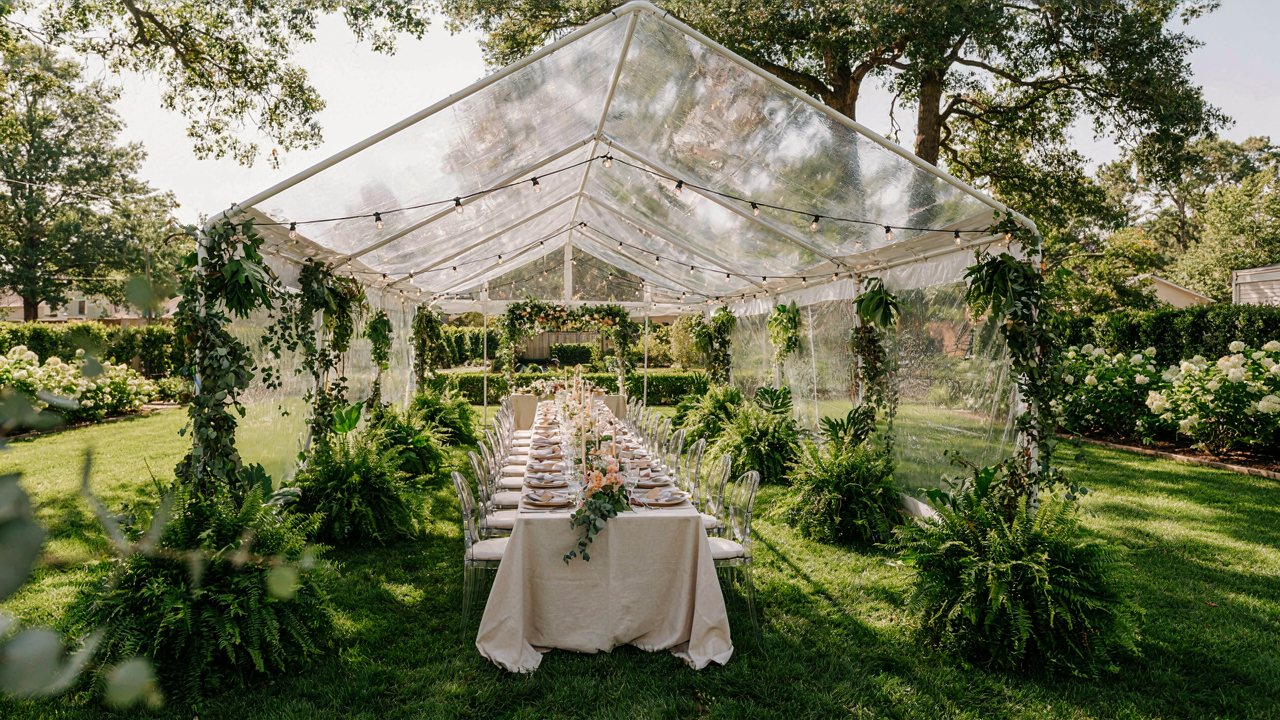
You want to believe that doing it yourself saves money. The real motive is avoiding the guilt of paying someone else to arrange flowers. But here’s the mechanism: decoration operates on the principle of signal-to-noise ratio from information design. Your backyard wedding cost rises not when you have fewer decorations but when you accumulate without intention. Every item you place—whether purchased or borrowed—requires space, storage, setup labor, and cleanup time. Intentional design means you select three elements that matter and execute them cleanly. Haphazard accumulation means you buy ten things because they’re “nice,” then rent extra tables to hold them all.

The cost difference between these approaches is massive. A single, well-executed focal point (one arch, one statement table, one lighting installation) runs $200 to $600 and takes two hours to set up. Random decor sprawl across the yard—string lights here, potted plants there, mismatched linens—costs $800 to $1,500 and takes four hours of labor to arrange without looking chaotic. Your guests notice the intentional design. They don’t notice the seventh lantern you bought at Home Depot.
- Focal Point Over Coverage: Choose one area (ceremony space, sweetheart table, bar) and invest your budget there. Leave everything else minimal or bare.
- Color Palette Limitation: Commit to two or three colors maximum. This eliminates impulse buys that don’t match and prevents visual noise.
- Borrowed vs. Purchased: Borrow what you’ll use once. Buy only items you already own or will keep afterward.
- Vertical Before Horizontal: Use height and layers instead of spreading items across floor space. One tall element costs less and looks sharper than five small ones.
- Negative Space as Design: Empty space is free. Leave sections of your yard bare intentionally rather than filling every corner.
The math rewards restraint. One well-lit ceremony arch with minimal surrounding decoration costs $300 to $400 total. A fully decorated yard with lights, flowers, linens, and “ambiance” everywhere costs $1,200 to $2,000. Both weddings happen. Only one of them looks planned instead of anxious.
Rentals Save Money Up Front, Then Trap You
Everyone tells you to rent decor instead of buying. They’re wrong about why. Rentals don’t save money overall—they move the cost around and hide it. When you rent, you pay setup fees, delivery, damage deposits, and return logistics. When you buy, you pay the item once, but you own the problem forever: storage in your basement, disposal when you’re done, or the guilt of letting it sit unused for five years.
The actual mechanism is inventory liability. Every owned item costs you rent (storage space value), insurance (if it’s worth protecting), and attention (mental load of maintaining it). For a one-time event, that’s wasteful. You’d rent because your backyard wedding cost is lower than ownership costs, not because rentals are cheaper per use. A rented arch runs $150 to $300. A purchased arch runs $80 to $200 but needs dry storage for potentially decades. If you buy, you must either store it (costing you $20 per year in opportunity cost of that space) or sell it (losing $40 to $80 in resale value).
Rentals make sense when the item is specialized, expensive, or size-constrained. A ceremony arch, uplighting rig, or dance floor. You rent those. String lights, potted plants, simple linens—you buy those because the rental markup is brutal (often 100 to 300 percent of purchase price), and the items compress into storage easily. The decision matrix: if you’ll use it again within three years or it stores flat, buy it. If it’s a one-shot specialized item or takes up cubic feet of space, rent it.

The Backyard Wedding On A Budget: Real Savings, Real Cuts

Who Actually Gets Invited
You want permission to exclude people without feeling guilty about it. Here’s the mechanism: your total cost per guest scales linearly with headcount, but your actual enjoyment per guest follows an inverse curve. Doubling your guest list doesn’t double your happiness. It halves your attention span with each person. Economics calls this diminishing marginal utility. In backyard weddings, it means every extra body adds catering, seating, and bathroom pressure without adding joy. The real savings don’t come from negotiating vendor rates. They come from deciding who deserves a seat.
The math is brutal. A seventy-five person backyard wedding costs roughly 40 to 60 percent less per head than a one hundred fifty person event, even controlling for food quality and alcohol. Smaller counts mean you can rent less furniture, buy less food, skip the portable restroom entirely, and actually talk to people without screaming. Write down everyone you want there. Then cut it by 30 percent. Those cuts hurt because they reveal who you were inviting out of obligation, not desire. Do that cut, and your budget problem mostly solves itself before you hire anyone.
Experiences Build Longer Than Decorations Decay
The common advice says splurge on flowers and string lights because they photograph well. That’s upside down. A flower arrangement costs 300 dollars, stays alive for five hours, then dies. A bonfire with someone you love costs twenty dollars in firewood and lasts until midnight in people’s memory. Prioritize what guests will talk about after the wedding fades from their feed. This is simple resource allocation: redirect money from visual props to activity and hospitality. Better food, better drinks, a lawn game that matters, a speaker system that works, seating that doesn’t require suffering. These create moments. Decorations create Instagram.
The real cost-cutting move is removing aesthetic elements entirely and replacing them with logistics that feel premium. A backyard without rented uplighting but with cold beer served in glass bottles and a curated playlist beats a backyard dripping in Edison bulbs where guests stand around hungry. Experiences require less capital investment than staged visuals do. Spend your money where guests’ senses encounter it directly: temperature-controlled food, shade structures that block sun, music that doesn’t compete with conversation. These are the things that shape whether someone says the wedding was good or says nothing at all. Build your budget around what people will remember, not what photographs capture.

Post Celebration Recovery: The Overlooked Tab

Cleanup Crews And Waste Removal
You’re ignoring this section because you’re already tired thinking about the wedding itself, and admitting there’s more work afterward feels like failure. Here’s the mechanism: entropy in thermodynamics states that disorder increases in closed systems. Your backyard is that system. Everything you brought in must leave, and the cost scales with how much you refuse to plan the exit. Most couples budget cleanup as an afterthought, then eat the bill when reality hits.
Professional cleanup crews charge between 800 and 2500 dollars depending on guest count and duration of stay. Waste removal adds another 200 to 600 dollars if your local hauler won’t absorb standard residential pickup. The real cost driver is speed. Same-day cleanup costs 40 to 60 percent more than next-day service because crews charge premium rates for urgency you created by not planning ahead. Hire your crew two weeks before, lock in standard pricing, and specify exactly what stays versus what goes.
Property Damage And Hidden Wear
Soil compaction from foot traffic alone can cost 300 to 1200 dollars to remediate if your lawn gets heavy use in one concentrated area. Grass dies in worn patches, and your yard loses resale value until it recovers. Beyond grass, look at fence posts that guests lean on, deck boards that flex under sustained weight, and garden beds trampled into mud. The common advice is to “protect your lawn with temporary fencing.” That works. What nobody says: temporary fencing itself costs 400 to 800 dollars to rent, so you’re paying to prevent damage instead of accepting it as wedding math.
Tree branches snap. Gutters collect debris. Patio pavers settle unevenly when soil underneath gets compressed. Minor foundation settling from concentrated weight can shift over months, requiring inspection fees of 300 to 500 dollars. Your insurance likely excludes event-related damage, so this comes from your pocket. The protocol is simple: document your property’s current state with photos and timestamps two weeks before the event, then document again one week after. This creates a baseline for any legitimate damage claims against your homeowner’s policy, which sometimes covers guest-related incidents if you file within the coverage window.
The Real Cost Isn’t In The Ledger; It’s In Your Misplaced Expectations

Most people blow their backyard wedding budget because they chase someone else’s aesthetic instead of their own constraints. You don’t need ten grand to throw a party that matters. You need brutal clarity on what you actually want versus what Instagram told you to want. Open a spreadsheet today and list every expense you can control. Then cut the bottom thirty percent without guilt. The couples who spend three thousand and feel wealthy always outshine the ones who spend fifteen thousand and feel broke.